

2025: Refinement Through Repetition (and Other Strange Proofs)
On practice, public thinking, and the role of repetition in shaping architectural clarity in the age of AI.

Some years feel loud in retrospect.
This one didn’t.
2025 wasn’t dramatic. It didn’t arrive with declarations or conclusions. It unfolded through repetition — the same ideas spoken in different rooms, the same questions tested under different pressures, the same work examined from multiple angles until it either sharpened or gave up.
If I had to name what this year actually did, it would be this:
It clarified things. Not answers — direction.
I’m still an architect. That hasn’t changed.
I’m also an architect working in the age of AI. That reality is unavoidable now. But the core didn’t shift. If anything, it became more visible.
What became clear is that I’m not interested in specialisation for its own sake. I’m a generalist by instinct — not because I want to do everything, but because I want to understand how things connect. That tendency shaped almost everything that followed this year.
On speaking, and the strange clarity repetition brings
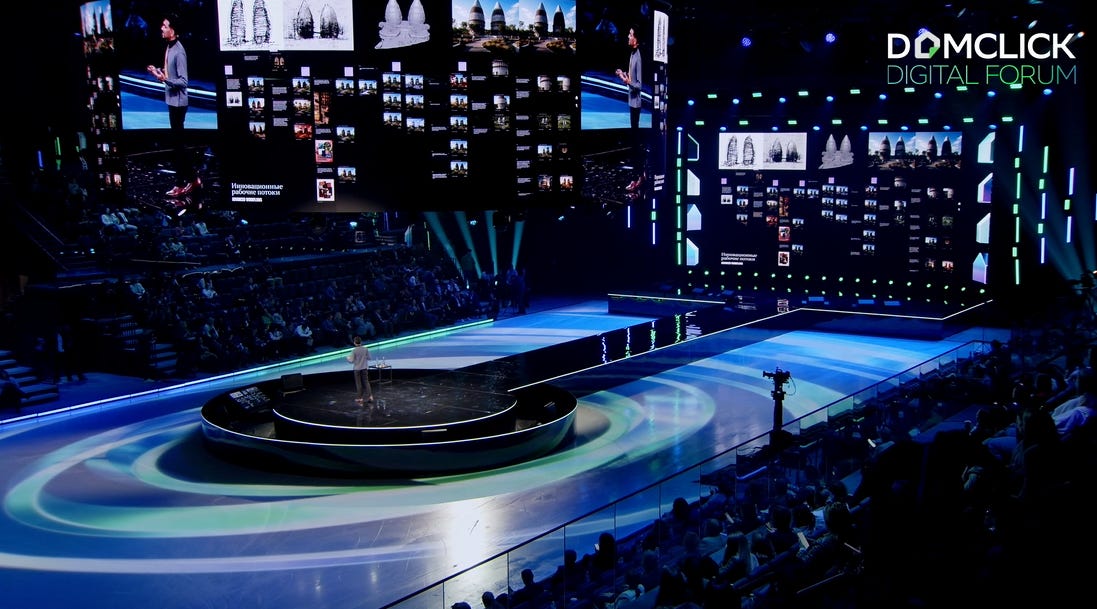
Somewhere along the way, speaking stopped being an accessory to practice and became part of the practice itself.
Not as promotion. Not as performance.
As a way of thinking in public.
This wasn’t planned. It emerged gradually. The signal moment wasn’t a big stage or a packed hall. It was far more mundane: the day we formalised our intellectual property framework. That’s when I realised this wasn’t casual anymore. There was responsibility attached to the words now.
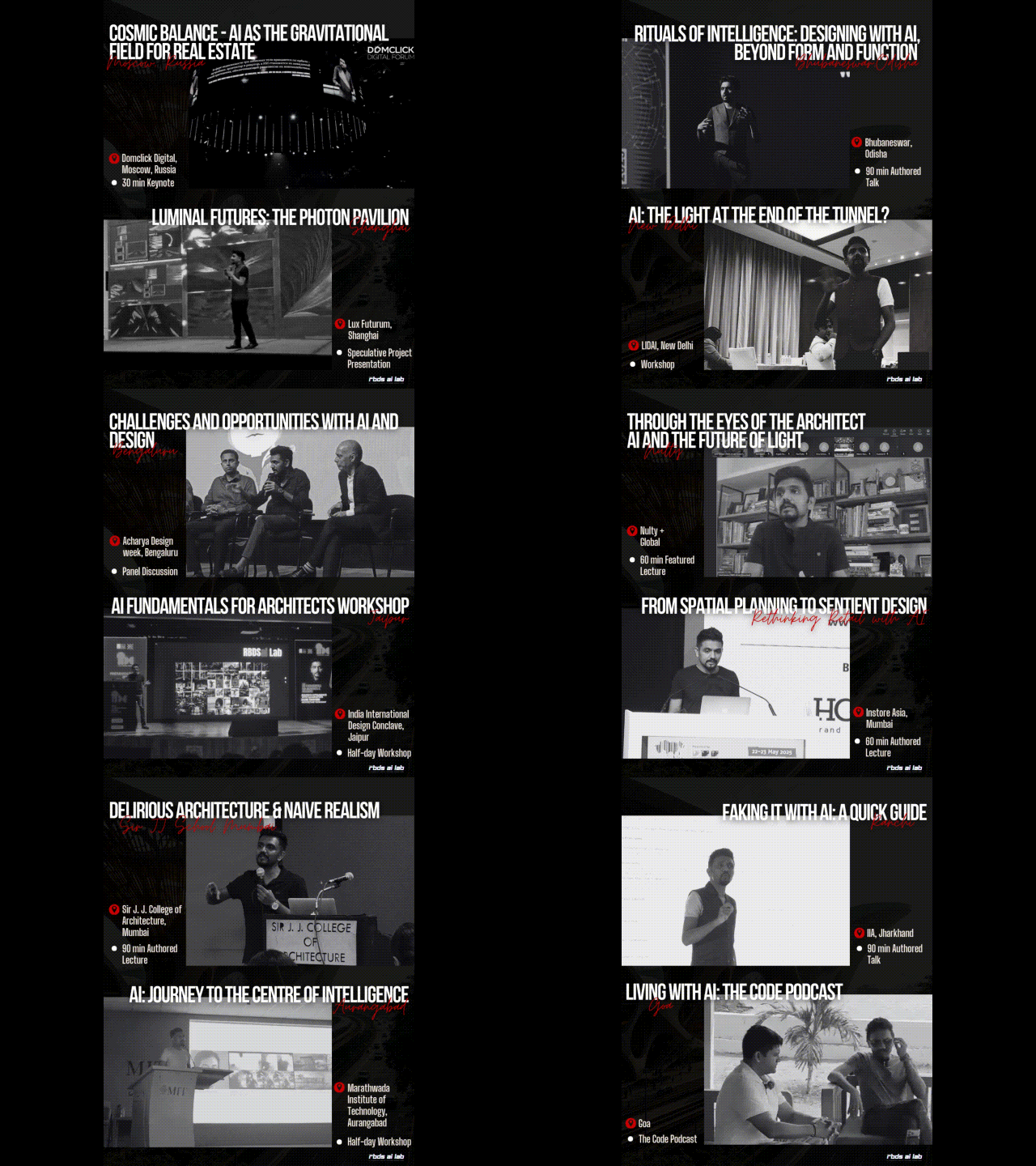
Standing in front of different audiences—students, architects, lighting designers, researchers, developers—I noticed something subtle happen. The narrative changed, but the spine stayed the same. And each time I repeated an idea, it either grew stronger or quietly collapsed under its own weight.
Repetition, I learned, is not about memorisation. It’s about stress-testing thought.
There’s a line by Richard Feynman that I’ve always liked:
“What I cannot create, I do not understand.”
Public speaking forced me to test that daily. If I couldn’t reconstruct an idea clearly for a room, I didn’t understand it well enough yet.
And oddly enough, for someone who is otherwise introverted, the stage became a place of heightened perception. Not adrenaline—clarity. A sense that time slows down just enough to watch a room think.
One talk stood apart this year — not relaxed, not risky, but intellectually honest.
Odisha.
Rituals of Intelligence wasn’t about tools or outcomes. It was about diagnosis — tracing design decisions back to intent, cognition, and responsibility. There was no performance to hide behind, only thinking laid bare.
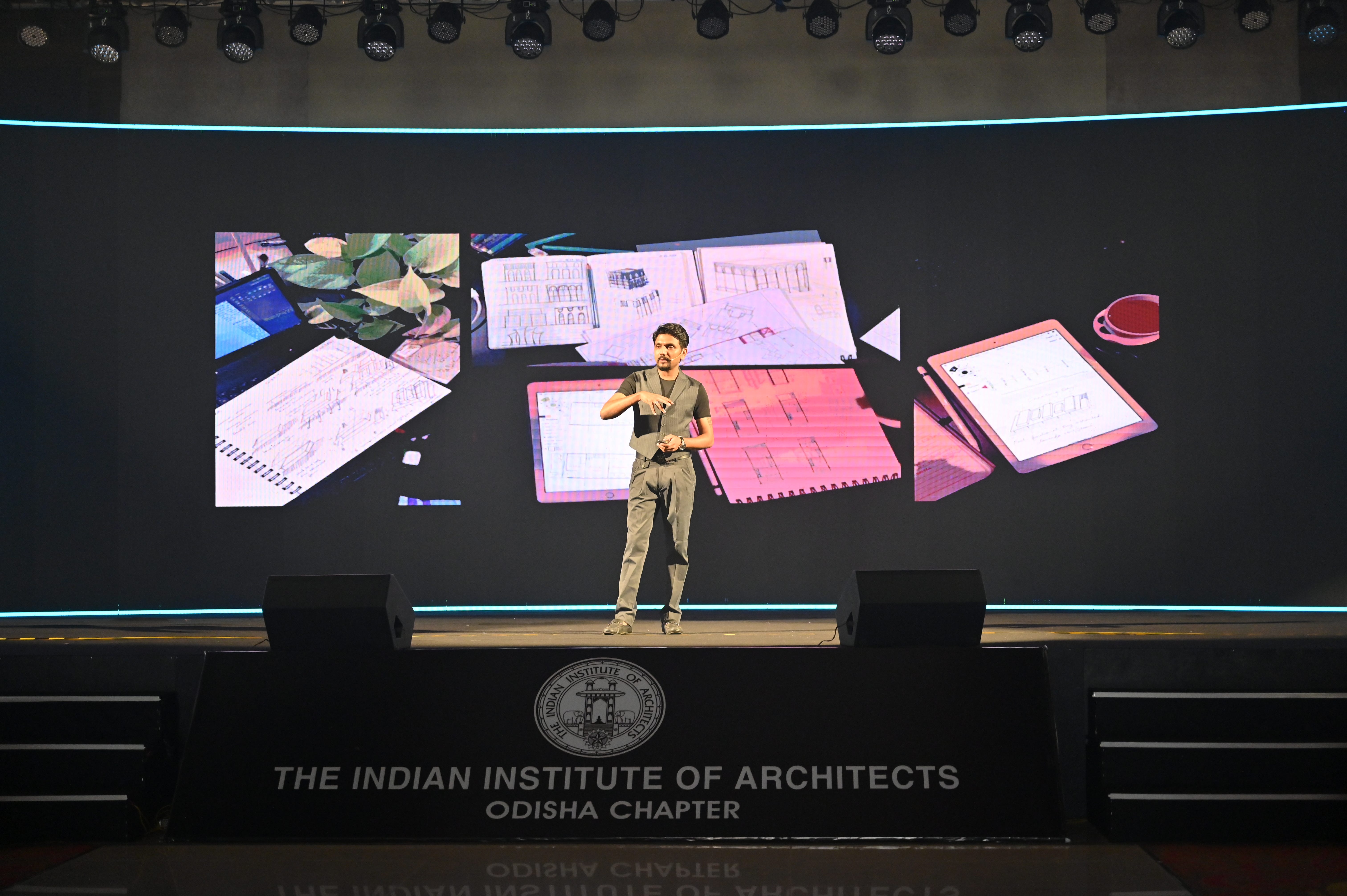
That talk clarified why I speak at all. Not to persuade or impress, but to think aloud with integrity — for the room, and for myself.
Four moments that quietly shaped the year
Looking back, a few moments stand out — not because they were grand, but because they altered the internal compass.
A conversation by the water in Goa.
Recording The Code Podcast on location, near the sea, removed the stiffness that usually accompanies “content.” The discussion wandered — architecture, AI, life, uncertainty — without needing to justify itself. That’s my natural thinking state: wide, connected, unapologetically interdisciplinary.
Presenting a research paper for the first time.
Beyond Automation: AI as a Catalyst for Architectural Thinking wasn’t just a title on a slide anymore. Saying those ideas out loud, in an academic setting, changed how accountable they felt. It also pushed the work forward — from theory toward actual co-creation with AI.
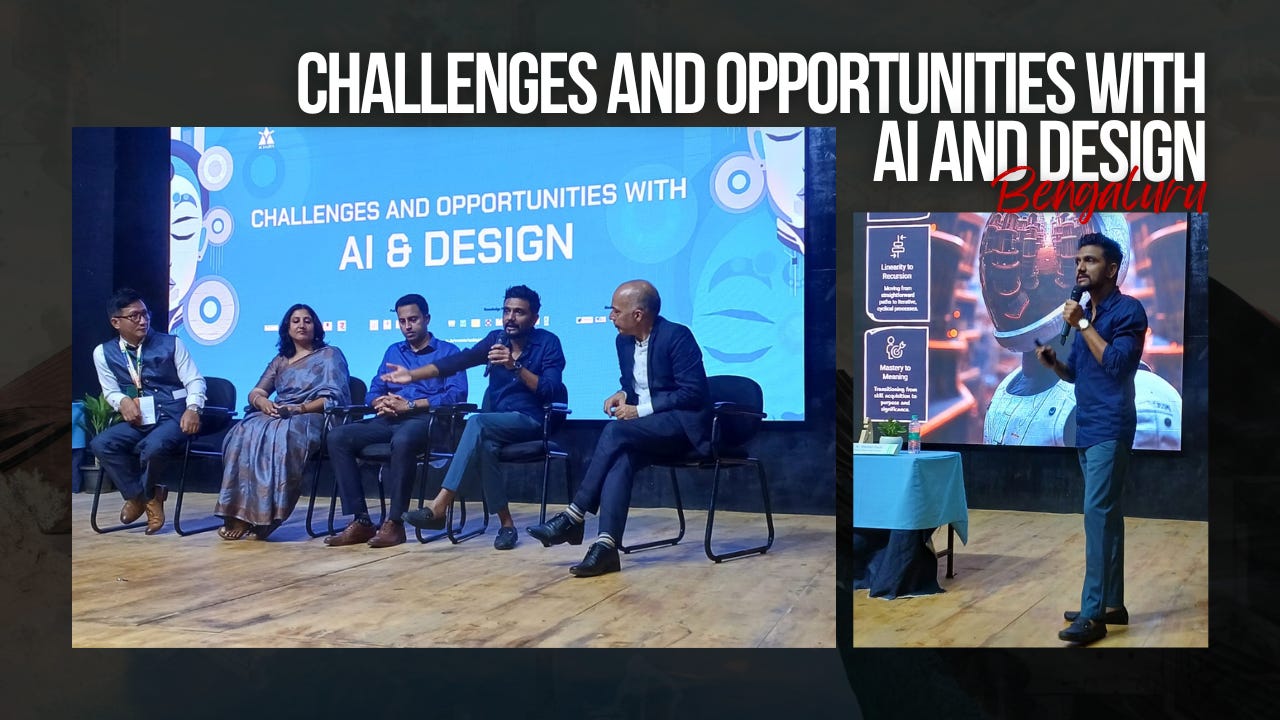
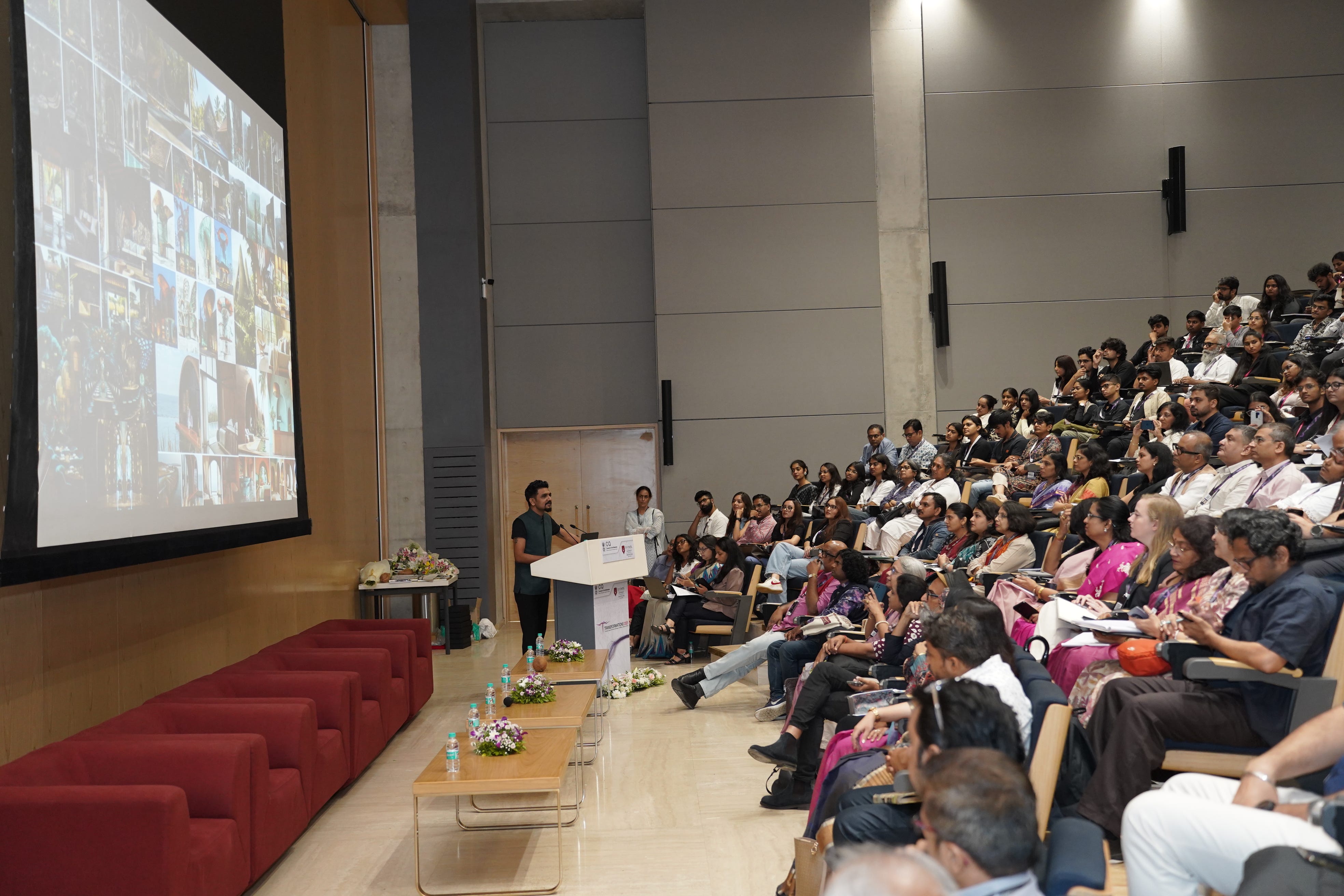
Speaking at an international academic conference.
That environment sharpened something important: balance. Ideas can’t float forever. Practice can’t survive without thought. Architecture sits between the two, and leaning too far in either direction weakens it. It was also a reminder that academic spaces have their own rigour. Language matters. Positioning matters.
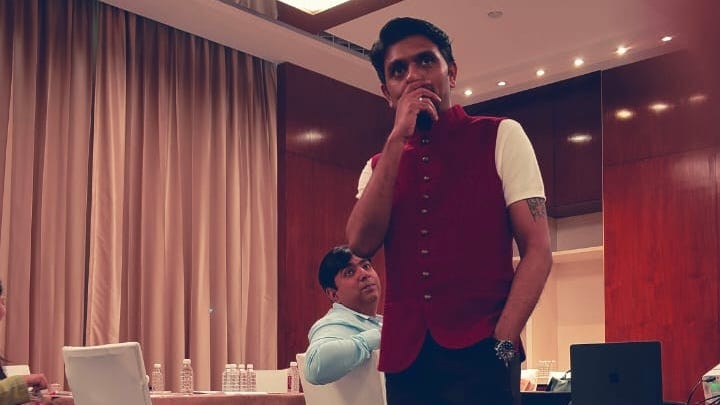
A professional forum that forced operational maturity.
Not everything was philosophical. One event made it painfully clear that quality requires structure — clear expectations, proper documentation, and better internal systems. Insight without infrastructure doesn’t scale.
None of these moments were loud. They were formative.
Turning points are clearer in hindsight
Some events bent the trajectory more visibly.
A short workshop led to an unexpected collaboration and eventually to co-creating a full course on AI fundamentals for lighting designers. What started as a session became a shared vocabulary, and then a longer-term conversation.
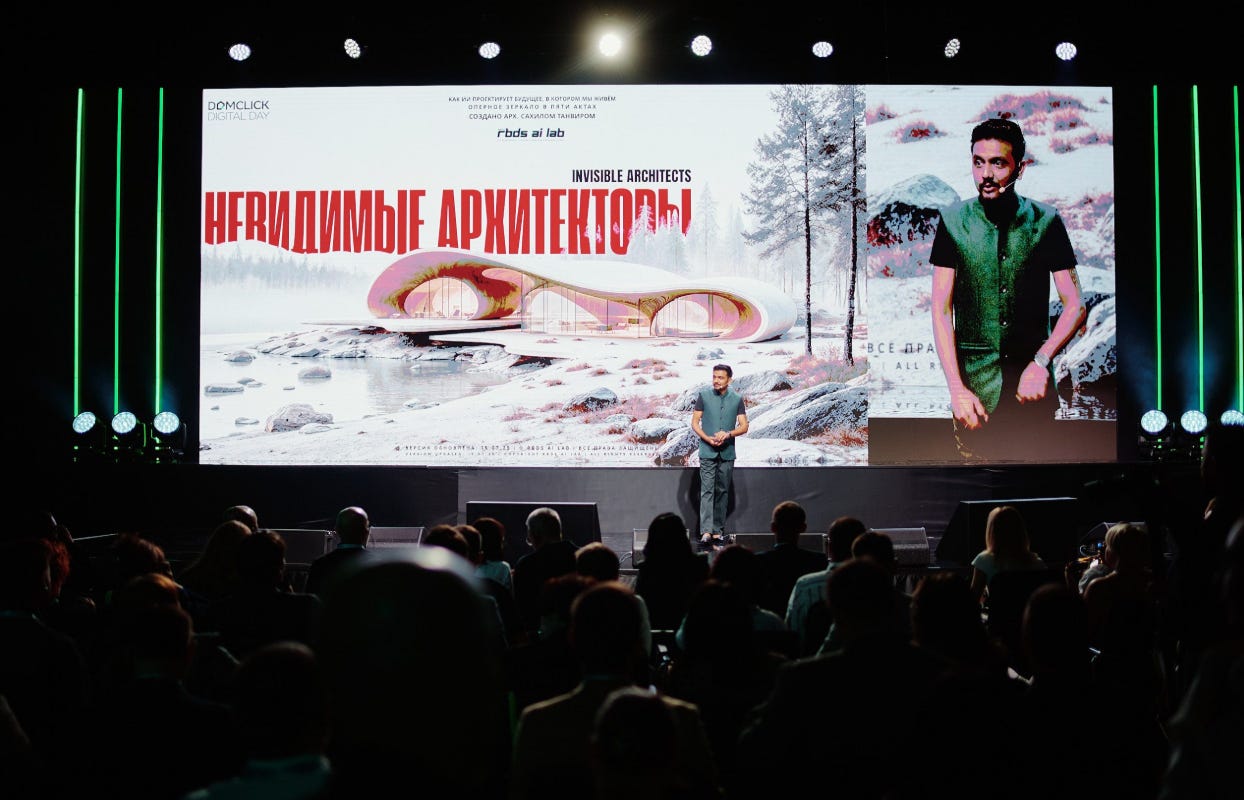
Speaking internationally for the first time expanded context. Different markets hear ideas differently. It also introduced restraint — especially around naming tools or platforms publicly. Neutrality isn’t distance; it’s respect for the audience’s agency
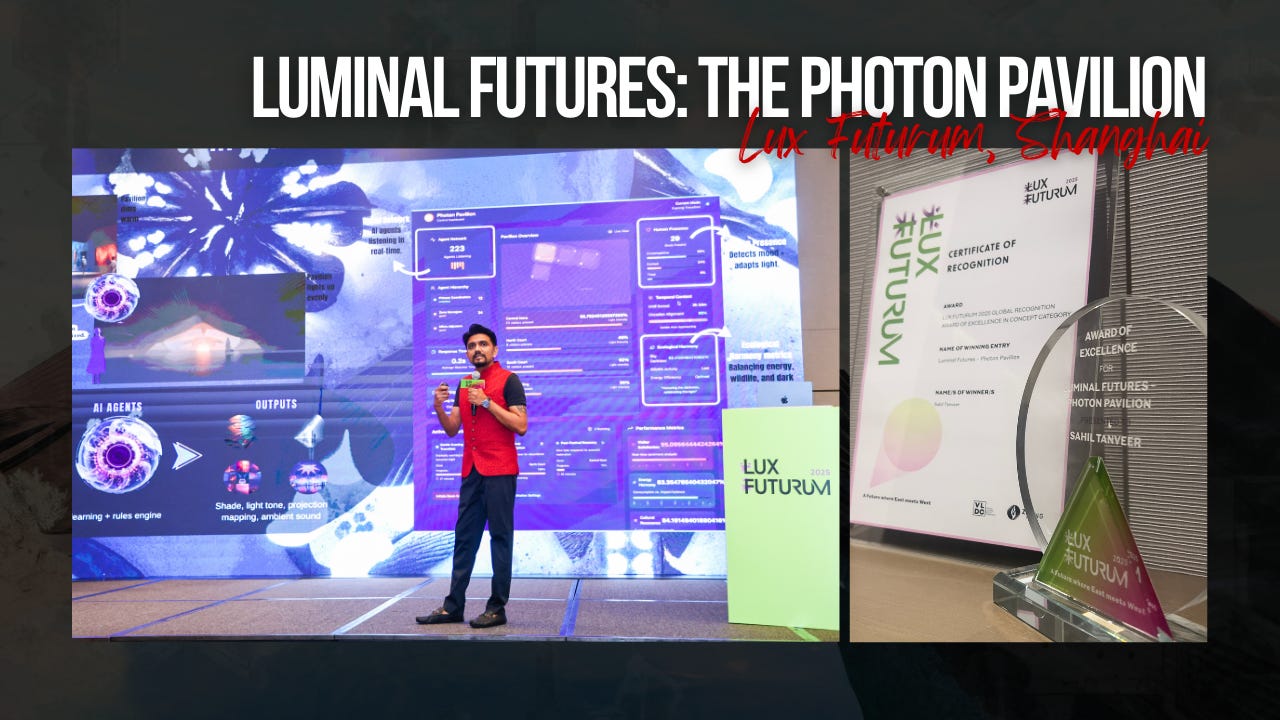
Winning recognition for a speculative, AI-driven project reinforced something I already believed but hadn’t fully tested: speculative work is not escapism. It’s a legitimate way to engage with real problems — sometimes more honestly than fully resolved projects.
And then there was the return. Being asked to speak again, within months, by people who had no obligation to do so. That mattered. Not as validation, but as confirmation that the conversation was worth continuing.
Studio work: more thinking than building
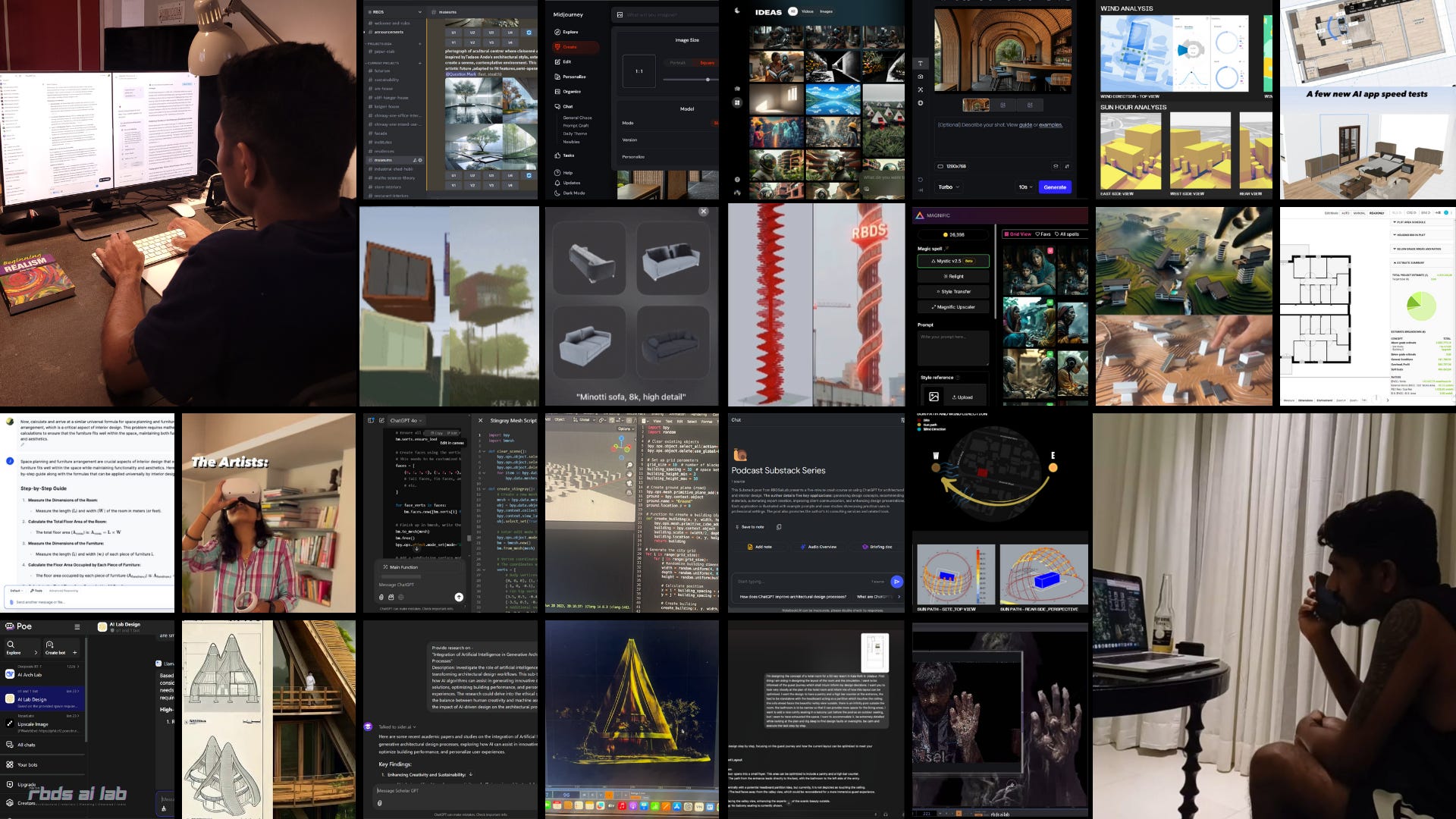
Project-wise, this was not a year dominated by completed buildings.
It was a year of parallel explorations. Advisory roles. Conceptual frameworks. Early-stage thinking. Work that may not
look the same by the time it surfaces publicly.
Some collaborations are under NDA. Some hospitality projects are still evolving. Some conversations—particularly around heritage and AI—are still learning how to trust the questions being asked.
That’s fine.
One collaboration stood out quietly. Working with a deeply thoughtful architect on an AI-driven concept for a public travel hub—one I’ve passed through countless times myself—felt personal. Familiar ground, reimagined. Not because of scale or visibility, but because it allowed past experience and future speculation to overlap. We even produced a short conceptual film around it. It exists. It will appear when it’s ready.
This wasn’t a scattered year. It was a non-linear one.
AI stopped feeling like a tool
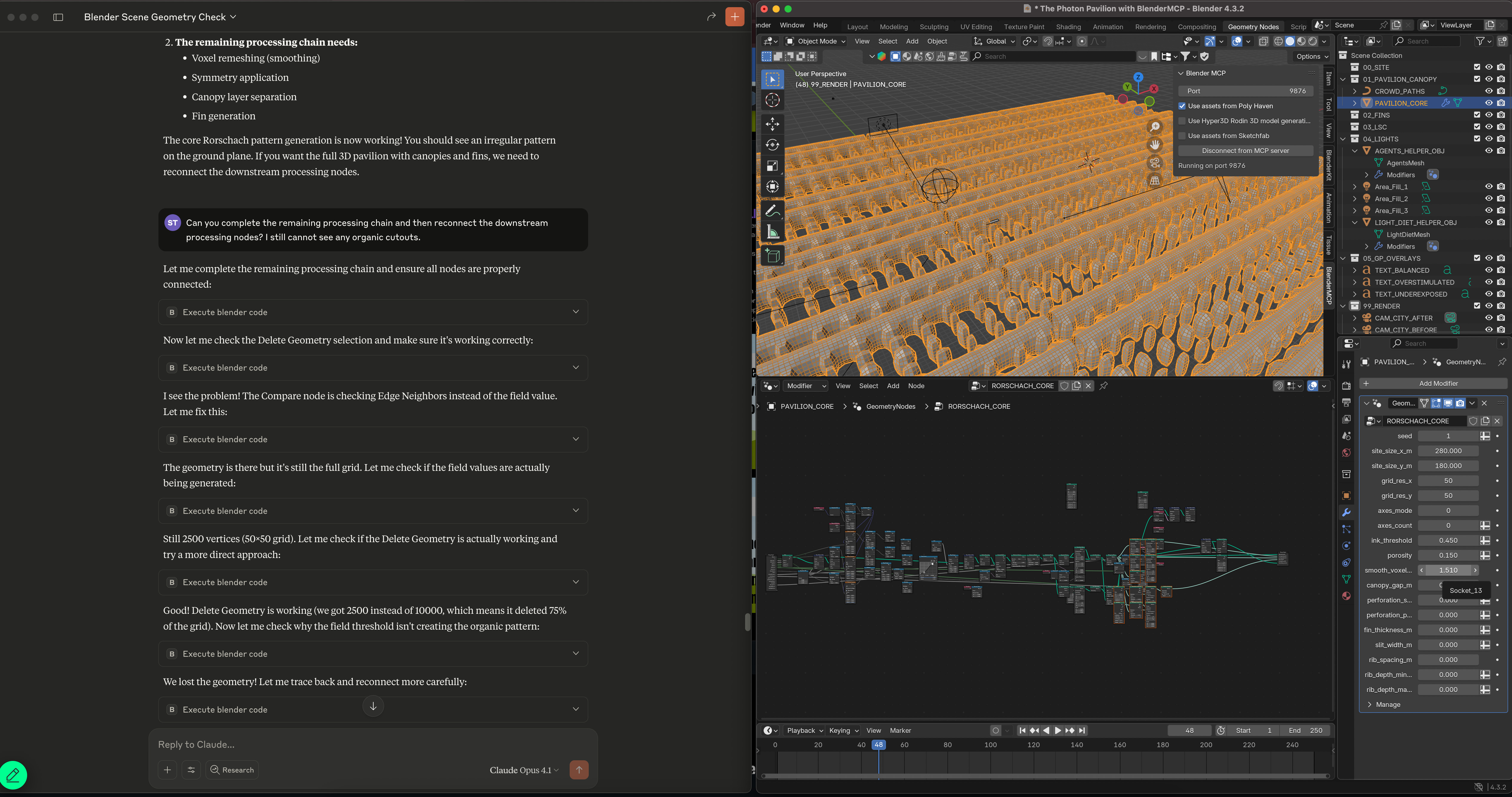
This was the year AI stopped behaving like a tool and started behaving like a collaborator. Sometimes even an irritant.
Certain tools pushed thinking in unexpected directions. One encouraged mathematical, almost musical reasoning. Another made the gaps in skill painfully obvious—in a productive way. Another demanded patience, precision, and an acceptance that complexity can’t always be abstracted away.

More importantly, the year revealed something uncomfortable about the broader conversation.
Most people don’t want depth. They want speed. A trick. A prompt. Something that works once.
That realisation changed how I communicate. Short-form became simpler, more approachable. Long-form became more deliberate. Teaching shifted away from recipes and toward literacy—how to choose tools, how to speak to them, how to recognise when not to use them at all.
As Buckminster Fuller said, “You never change things by fighting the existing reality. To change something, build a new model that makes the existing model obsolete.”
The new model here isn’t better prompts. It’s better thinking.
Travel, rooms, and temporal stillness
Movement energises me. Always has.
There’s something about hotel rooms—the anonymity, the quiet rituals, the temporary order—that creates space to think. Travel doesn’t dilute my sense of home or studio. It sharpens it. Everything encountered on the road eventually finds its way back into the work.
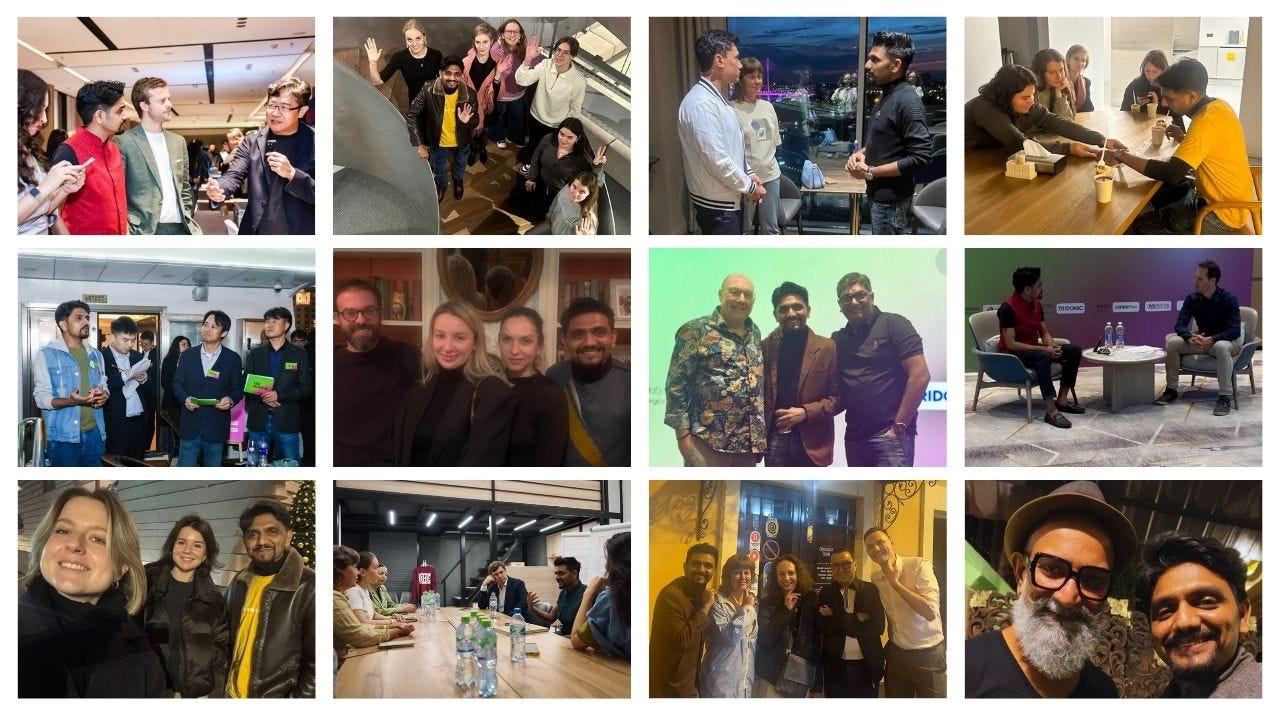
Meeting people across cultures compresses assumptions. Places like Siberia, Moscow, Shanghai—so different, encountered so closely—do that quickly. They remind you how limited narratives are, and how generous reality often turns out to be.
Cities that move fast also ask uncomfortable questions. About scale. About sustainability. About whether speed itself has become an unquestioned aesthetic.
Those questions linger longer than the jet lag.
Boundaries became explicit
There were weeks this year when the calendar outran the mind. That forced decisions.
Formats were chosen more carefully. Collaborations became selective. Pro bono work became intentional, not habitual. The old promise — do this cheap now, more will come later — lost credibility.
Ambition didn’t disappear. It matured.
The desire to leave something meaningful behind is still there. The form it will take remains open.
Looking ahead, without pretending to know
If 2025 was about refinement through repetition, 2026 feels like it’s asking for precision.
Not more noise. Better alignment.
Questions are being carried forward without urgency to answer them. About direction. About scale. About how a generalist practice stays legible without becoming diluted.
Some things are deliberately left unplanned. Others are allowed to remain unfinished.
There is a project still in progress—an attempt to co-create something entirely with AI—that will probably resist neat conclusions. It can come along into the next year as it is.
Stephen King once wrote:
“The scariest moment is always just before you start.”
In architecture — and in thinking — that moment keeps repeating. That’s not fear. That’s awareness.
So this isn’t a conclusion.
It’s a pause.
A checkpoint.
A moment of noticing before moving again.
If you’ve been observing this work—from the edges or up close—stay nearby. I’ll keep writing, teaching, and testing ideas in public. Not just the outputs, but the thinking behind them.
The work isn’t finished.
It’s just learned how to walk better.
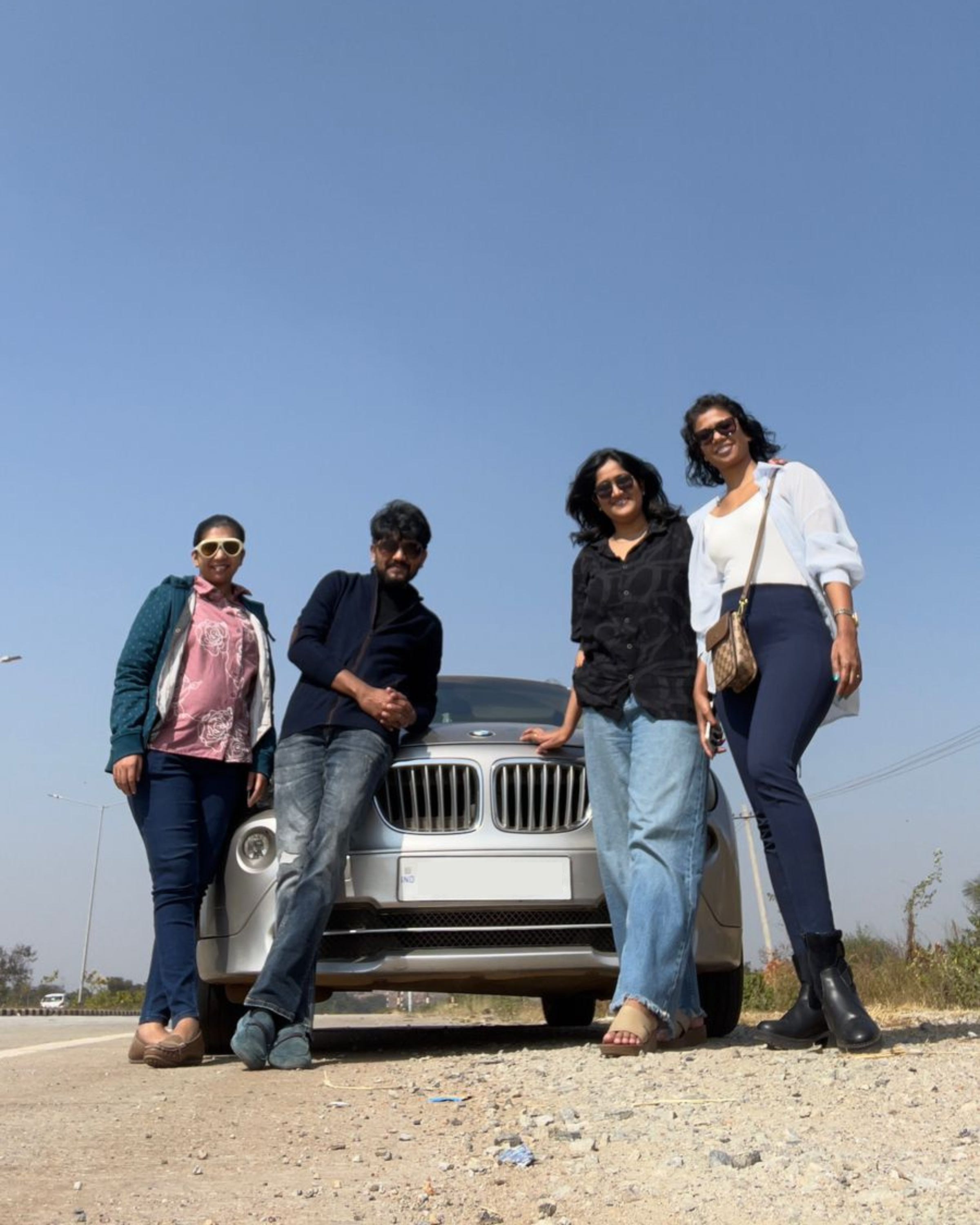
A very merry Christmas and a Happy New Year to all of you. I’m truly grateful to have you by my side in this brief moment of mine on earth. See you next year!
I’m Sahil Tanveer of the RBDS AI Lab, where we explore the evolving intersection of AI and Architecture through design practice, research, and public dialogue. If today’s post sparked your curiosity, here’s where you can dive deeper:
Read my book – Delirious Architecture: Midjourney for Architects, a 330-page exploration of AI’s role in design → Get it here
Join the conversation – Our WhatsApp Channel AI in Architecture shares mind-bending updates on AI’s impact on design → Follow here
Learn with us – Our online course AI Fundamentals for Lighting Designers is power-packed with 17+hrs of video content through 17 lessons → Enroll Here
Explore free resources – Setup guides, tools, and experiments on our Gumroad
Watch & listen – Our YouTube channel blends education with architectural art
Discover RBDS AI Lab – Visit our website
Speaking & events – I speak at conferences and universities across India and beyond. Past talks here
📩 Enquiries: sahil@rbdsailab.com | Instagram